

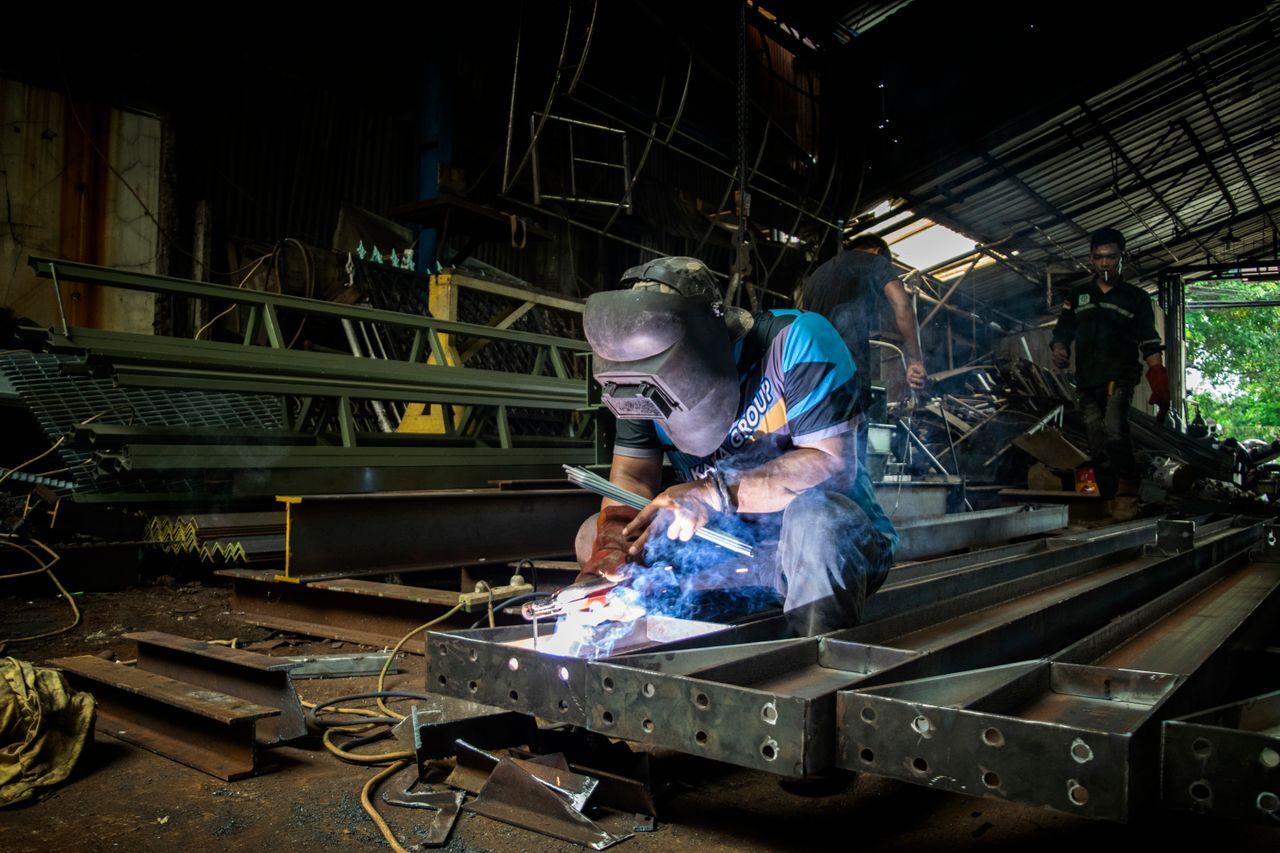
The Welder Shortage Is a Quality Problem Before It Is a Labor Problem
The welder shortage in naval shipbuilding is usually discussed as a hiring problem: not enough people entering the trade, too many retiring, wages competing against easier work. That framing is accurate but incomplete. The shortage does its real damage downstream, in weld quality, documentation integrity and rework and that is where a shipyard can act now, without waiting three to five years for a new hire to reach proficiency.
What the workforce data actually says
GAO’s review of the private-sector shipbuilding industrial base found that all seven shipbuilders building the Navy’s battle force ships face workforce limitations affecting their ability to hit the Navy’s delivery goals.1 Three findings matter most for quality teams:
- Proficiency takes years. Shipbuilder documentation cited by GAO puts skilled-trade proficiency at three to five years. One builder reported 57% of its trade workers had fewer than five years of experience
- The pipeline is large. A DOD briefing from the 45-day shipbuilding review estimated the industrial base needs roughly 174,000 new workers over the next decade, accounting for attrition.
- Inexperience converts into rework. GAO notes that newer workers require greater supervision to avoid quality problems — the kind of quality problems and late-discovered rework that have affected the lead Columbia-class submarine schedule — and that many builders will struggle to provide it. That lead boat is now at least 18 months behind its contract delivery date.
Meanwhile the demand side is not waiting. Virginia-class construction has been running around 1.1–1.2 boats per year against a two-per-year goal, with the Navy targeting roughly 2.33 per year to sustain the fleet and meet AUKUS commitments. A shipyard workforce shortage on that curve is not a staffing inconvenience, it is the constraint.
Three ways the welder shortage shows up as compliance risk
1. Qualification churn
High turnover plus rapid hiring means welder qualification records change constantly. Every new welder needs qualification to the right procedures; every existing welder needs continuity maintained. When that tracking lives in a spreadsheet, three things happen: continuity lapses go unnoticed until a records review, welders get assigned to work outside their qualified range, and requalification happens reactively at the worst possible moment in the schedule.
2. Procedure interpretation
Experienced welders compensate for ambiguous documentation. Newer welders follow it literally which is correct, and which means WPS clarity, revision control and accessibility suddenly matter far more than they did five years ago. A superseded revision in circulation used to be survivable. With a workforce that has under five years of experience, it produces nonconforming welds.
3. Late defect discovery
Thinner supervision means fewer errors caught in the moment. Defects surface at NDT or, worse, at a later stage when access is gone. The cost curve here is steep: the same weld defect that costs an hour to correct at the station can cost weeks once it is buried behind structure and outfitting.
For the specific paperwork failures that follow from this, five common welding documentation challenges for naval suppliers breaks down the ones we see most often.
Digitizing weld quality is the fastest available lever
You cannot hire experience. You can, however, move the knowledge that experience used to supply into the system itself. That is the practical case for digitizing a shipyard's weld quality function — and it delivers on both compliance and speed rather than trading one for the other.
-
Compliance: validation moves to the point of authoring. When NAVSEA-aligned rules are built into procedure and qualification development, an out-of-range essential variable is caught by the system, not by an auditor eighteen months later. NavWeld handles WPS, PQR and welder qualification development with that validation built in, so errors are caught during authoring and issues found during shipyard review are reduced.
-
Speed: the documentation loop stops gating the work. Two loops consume a large share of time in naval weld work. NDT procedure submissions rejected for technique or formatting reasons, and records reconciliation at closeout. Structured workflows and validation in NavNDT help ensure procedures are complete and compliant the first time, improving submission quality. Digital inspection capture in QMSuite eliminates paper forms, so inspection data is recorded electronically at the point of inspection and captured consistently, and across the WeldQC platform, traceability is maintained from procedure through inspection and final records.
-
Rework: causes become visible while you can still act. When inspection results are structured data instead of scanned forms, patterns emerge, a specific joint configuration, a specific procedure, a specific shift, a specific supplier. That is how a yard with an inexperienced workforce finds its training targets in weeks rather than after a program review. Most yards cannot do this today because, as we covered previously, their quality data is trapped in spreadsheets.
A practical sequence for shipyards and suppliers
If your yard or shop is taking on submarine industrial base work, four moves pay back quickly:
- Fix revision control first. One authoritative source for every WPS and NDT procedure. This is the highest-risk, lowest-effort fix.
- Automate continuity and expiry alerts. Move welder qualification tracking off spreadsheets so lapses surface before assignment, not after.
- Digitize inspection capture at the deck plate. Eliminate the paper-to-system transcription step where traceability breaks.
- Instrument rework by cause. Distinguish weld defects from documentation-driven rework. Report both monthly.
- Then invest in training. With steps 1–4 in place, your training spend is directed by data instead of anecdote.